Beyond the Screen: Why Tactile HMI is Critical for High-Stakes UAV Piloting
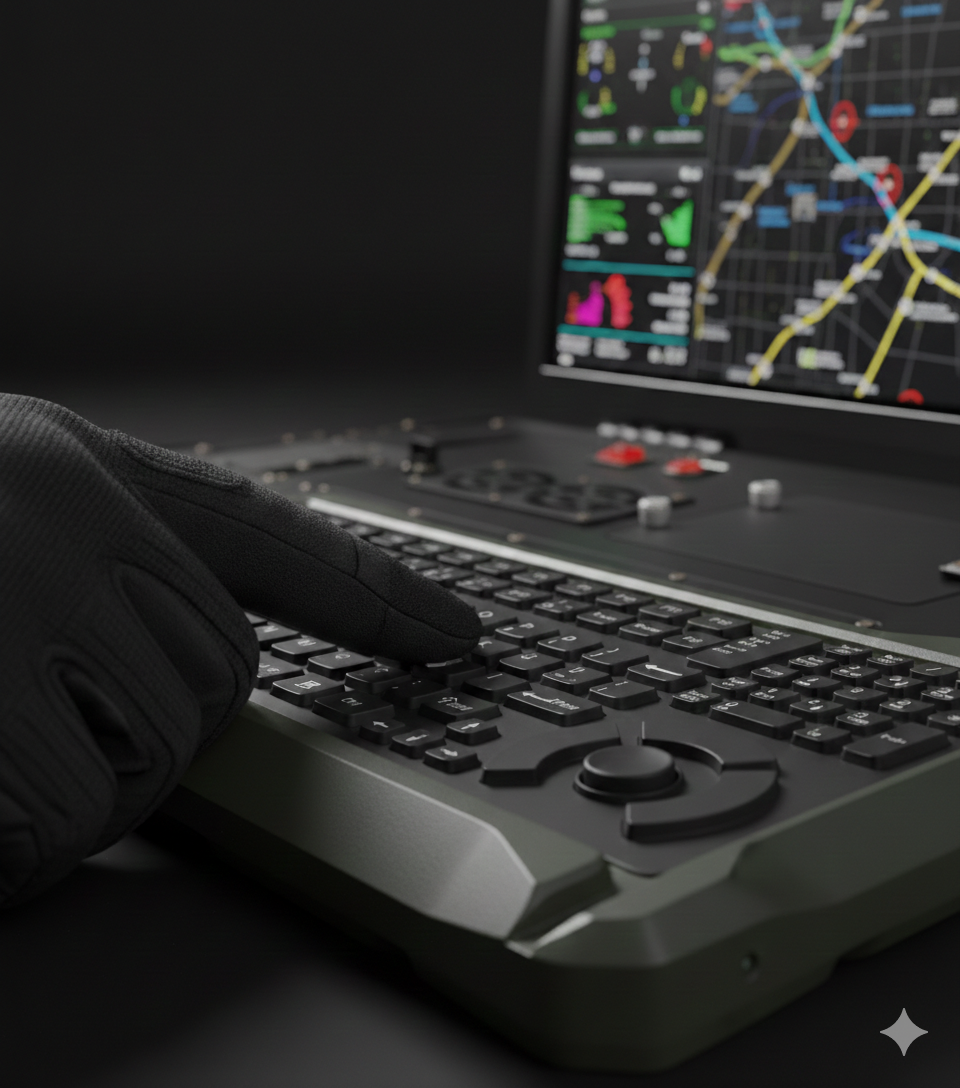
In the modern landscape of unmanned systems, there is a growing trend toward "glass cockpits" and tablet-based control. While touchscreens offer versatility for consumer drones, the professional defense and industrial sectors are rediscovering a fundamental truth: in high-stakes environments, tactile feedback is irreplaceable. For UAV pilots and UGV operators, the Human-Machine Interface (HMI) is the primary sensory link to a multi-million dollar asset. When that link is a flat piece of glass, it significantly increases the margin for error.
The "Eyes-Up" Requirement The primary challenge in tactical piloting is maintaining situational awareness. An operator should never have to look down at their hands to ensure they are pressing the right button. Ruggmate’s RSK-series keyboards and RSTK-series trackball units are engineered to solve this "visual cognitive load" problem. By providing distinct mechanical snap feedback—often referred to as tactility—these components allow for "eyes-up" operation. The pilot feels the engagement of the key through their gloves, confirming the command without diverting their gaze from the mission-critical video feed or telemetry data.
Precision Through Hall-Effect Technology When it comes to flight maneuvers or controlling high-definition gimbal cameras, the resolution of the input device is everything. Typical consumer-grade joysticks rely on potentiometers, which use physical contact to measure movement. Over time, these wear down, leading to "dead zones" or "sensor drift."
Ruggmate’s RJH-01 Rugged Joystick utilizes non-contacting Hall-effect technology. By measuring changes in magnetic fields rather than physical friction, the RJH-01 offers longer life span than potentiometer-based designs and incredible precision. This ensures that the slightest movement by the operator results in a smooth, predictable response from the aircraft. For payload operators performing delicate tasks—such as inspecting power lines or tracking a target from three miles away—this level of fidelity is the difference between mission success and failure.
As unmanned platforms become more autonomous, the moments that require manual intervention are usually the most critical. By prioritizing tactile HMI hardware, organizations empower their operators with the confidence and precision needed to handle the unexpected. Ruggmate’s commitment to mechanical excellence ensures that when the mission gets tough, the connection between man and machine remains unbreakable.